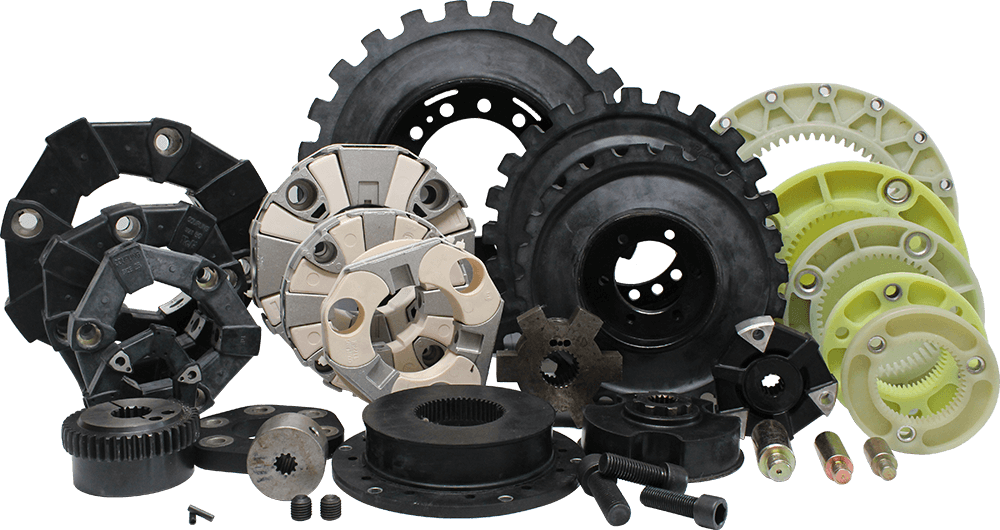

You must find the right coupling model code identification for your machine. This helps you avoid expensive mistakes. Picking the wrong coupling can break your equipment and stop your machine from working. Using a step-by-step approach to find the model code identification gives you many benefits. For example, it helps you learn about design choices, ensures the product works well, and cuts down on rework. See the benefits below:
YNF Rubber is ready to help you with strong Flexible Rubber Coupling solutions for any job.
Key Takeaways
Find the right coupling model code. This helps you avoid expensive errors. It also keeps your machine running well.
Learn about the four parts of a coupling model. These are series, structure, size, and element version. Knowing these helps you choose better.
Look at key things like flange size and torque needs. Check alignment too. This helps you pick the best coupling for your machine.
Check your couplings often for wear or damage. This stops your machine from breaking down by surprise.
Talk to YNF Rubber for expert help. They can give you custom solutions for your coupling needs.
Importance of Coupling Model Code Identification
Risks of Incorrect Coupling Selection
Choosing the wrong coupling can cause many problems for your machines. Sometimes engineers use couplings they have used before, but not all couplings work the same. Picking a coupling just because it costs less can cause your machine to not work well. Cheaper couplings might not do what you need. If you pick the wrong coupling, your machine’s drivetrain can get stressed all the time. This stress can make parts break. If you use a rigid coupling when you need one that handles misalignment, every movement of the shaft goes right into the bearings and seals. This can damage them and make repairs expensive.
Engineers sometimes use couplings from past jobs, but this can cause problems because couplings are not all made the same.
Choosing a coupling because it is cheaper can make your machine not work right, since it might not fit your needs.
Picking the wrong coupling can put stress on the drivetrain, which can make parts fail.
Using a rigid coupling when you need misalignment can send every shaft movement into bearings and seals, which can cause damage.
Benefits of Accurate Identification
Finding the right coupling model code helps you avoid these problems. It keeps your machines working well. If you figure out the model codes correctly, you can pick the best coupling for your machine. This means you spend less money fixing things and your machine stops less often. You also keep your equipment safe from extra stress and damage.
Mechanism | Description |
|---|---|
Misalignment Compensation | Handles shaft misalignments, so parts don’t get stressed, which lowers wear and breakdowns. |
Vibration Damping & Absorption | Takes in vibrations and shock, which protects parts and makes work safer. |
Enhanced Load Distribution | Spreads loads evenly, so parts don’t get too much stress and are less likely to break. |
Ease of Maintenance | Easy to install and replace, so repairs take less time. |
You need to follow some important steps to find the right coupling model code. First, learn about the four layers of a coupling model. Look at the series, structure, size, and element version. Then, check extra details for ARCUSAFLEX couplings. Make sure you know the flange size, hole pattern, bore or hub structure, element version, torque needed, and what the coupling will be used for.
Learn the Four Layers of a Coupling Model:
Series: Shows the product family.
Structure: Tells the type of coupling.
Size: Shows how big the coupling is or how much torque it can handle.
Element version: Means rubber hardness, material type, or insert type.
Check Extra Details for ARCUSAFLEX:
Flange size
Hole pattern
Bore or hub structure
Element version
Torque needed
What the coupling will be used for
YNF Rubber’s knowledge and flexible rubber couplings help you avoid expensive mistakes. You get solutions that work well with your machines and keep your work safe.
Layers of Coupling Model Codes
Knowing coupling model codes helps you pick the right part for your machine. Each code has different layers. These layers tell you about the series, structure, size, and element version. Let’s look at each one so you can choose the best option.
Series and Product Line
The series and product line show the family of the coupling. Different series are made for different jobs. Some couplings are best for high-precision work. Others handle more vibration and misalignment.
Rigid couplings are used when you need exact alignment.
Flexible couplings are good when your machine moves or shakes.
Tip: Always check the product line to match your machine’s needs. Some lines, like U.S. Tsubaki’s Atra-Flex®, are made for special torque or alignment needs.
Structure and Assembly Style
The structure and assembly style tell you how the coupling is built and connected. This affects how well it handles torque and misalignment. Here is a table showing common types:
Coupling Type | Description | Performance Impact |
|---|---|---|
Disc coupling | Uses flexible metal discs to send torque, fixing misalignments. | Precise torque, no backlash, good for high speeds. |
Jaw coupling | Has interlocking hubs and a rubber spider for smooth torque. | Absorbs shock and vibration, lasts longer. |
Beam coupling | Made from one piece of metal, gives flexibility and stiffness. | Handles misalignments, good for rotary systems. |
Chain coupling | Uses a roller chain to connect shafts, handles high torque. | Strong and reliable for tough jobs. |
Size and Diameter
Size and diameter are important to make sure the coupling fits your machine. Picking the wrong size can cause problems.
The right size helps your system run smoothly and prevents leaks.
Bigger couplings handle more flow or torque.
Always check the pressure rating and make sure the threads match.
Note: Proper sizing helps your coupling last longer and keeps your machine safe.
Element or Rubber Version
The element or rubber version shows what material is inside the coupling. This part absorbs shocks and helps the coupling bend a little. Different types are used for different jobs. Here is a table to help you:
Coupling Type | Description | Typical Applications |
|---|---|---|
Jaw Couplings | Two hubs with a rubber or polyurethane spider. | Pumps, fans, conveyors. |
Tire Couplings | Thick rubber tire element for misalignment. | Marine generators, mining, steel mills. |
Spider Couplings | Star-shaped rubber for smooth motion. | Motion control, process industries. |
Elastomeric Disc Couplings | Rubber discs bonded to metal flanges. | Encoders, pumps, general machinery. |
Picking the right element helps your machine run quietly and last longer. Always match the element to your machine’s needs.
ARCUSAFLEX Coupling Model Code Identification
Code Structure Overview
Before you pick or change an ARCUSAFLEX coupling, you need to know the code. The code gives you important facts about the coupling. Each part of the code tells you something different. It shows the series, size, flange type, and rubber element version. You will see numbers and letters in the code. These show the product line, how it is put together, and special features.
The series tells you which family the coupling belongs to.
The size tells you how wide it is and how much torque it can handle.
The flange type shows how it connects to your machine.
The rubber element version tells you what it is made of and how hard it is.
Tip: Always write down the full code from your old coupling. This helps you find the right new one and stops mistakes.
Key Technical Checks for ARCUSAFLEX
You need to check some important things when picking a new ARCUSAFLEX coupling.
Measure the flange size and the hole pattern.
Look at the bore or hub structure.
Find out how much torque your machine needs.
Check the rubber element version for what it is made of and how hard it is.
Make sure the coupling works for your job, like for excavators, boats, or factory machines.
You should also check if the alignment and mounting style are right. If you miss any step, you could choose the wrong coupling. Knowing the model code helps you avoid mistakes and keeps your machine working well.
YNF Rubber Solutions for ARCUSAFLEX
YNF Rubber gives you good choices for ARCUSAFLEX coupling replacements. You get strong rubber and a great fit. YNF Rubber replacements are just as good as the original ones in material, strength, and fit. You also pay less money.
Here is a table that compares Centaflex Size 30 and YNF Size 30 Replacement:
Feature | Centaflex Size 30 | YNF Size 30 Replacement |
|---|---|---|
Material | High-quality rubber | High-quality rubber |
Durability | Excellent | Excellent |
Price | High | Competitive & Affordable |
Compatibility | OEM fit | Perfect replacement |
Hole Types | Step & Straight | Step & Straight |
Applications | Excavators, Marine, Industrial | Excavators, Marine, Industrial |
You can count on YNF Rubber for flexible rubber couplings that fit your needs. You get a great fit for your machine and save money without losing quality.
CENTAFLEX-A Coupling Model Code Identification
Understanding Code Suffixes
When you look at CENTAFLEX-A couplings, you will see codes with letters and numbers. Each part of the code tells you something important. The main code shows the series and size. The suffixes give extra details about the design or material. For example, a suffix might show if the coupling has a special rubber hardness or a different hub style. You should always check the full code before you order a replacement. This helps you match the new coupling to your machine.
Tip: Write down the whole code from your old coupling. This makes it much easier to find the right model code and helps you not make mistakes.
Technical Data for Selection
You need to look at some important details when you pick a CENTAFLEX-A coupling. Every machine is different and needs its own type. The table below shows the main things you should check:
Specification | Description |
|---|---|
Torque Capacity | Varies from low to high depending on the model. |
Misalignment Compensation | Handles various degrees of misalignment. |
Operating Speed | Suitable for a wide range of operating speeds. |
Temperature Range | Operates in a wide temperature range. |
Material Compatibility | Compatible with various shaft materials. |
Elastomer Hardness | Available in different hardnesses for specific uses. |
You should measure your machine’s torque and speed. Check the temperature where your machine works. Make sure the coupling fits the shaft material and size. Pick the right elastomer hardness for your job.
YNF Rubber’s Flexible Rubber Coupling Compatibility
YNF Rubber has flexible rubber couplings that fit CENTAFLEX-A models. You get good performance and a perfect fit. The table below shows some important sizes and numbers for a typical replacement:
Specification | Value |
|---|---|
Dimensions A | 70 |
Dimensions d3 | 260 |
Dimensions E | 62 |
Dimensions G | 31 |
Dimensions HD | 125 |
Dimensions P1 | 45 |
Dimensions P2 | 46 |
Dimensions M | 20 |
Rubber Quality [Shore A] | 60 |
Nominal torque [TKN] kNm | 1.700 |
Maximum torque [TKmax] kNm | 4.900 |
Continuous vibratory torque [TKW] kNm | 0.700 |
Permissible power loss [PKV] W | 150 |
Dynamic torsional stiffness [CTdyn] kNm/rad | 40.00 |
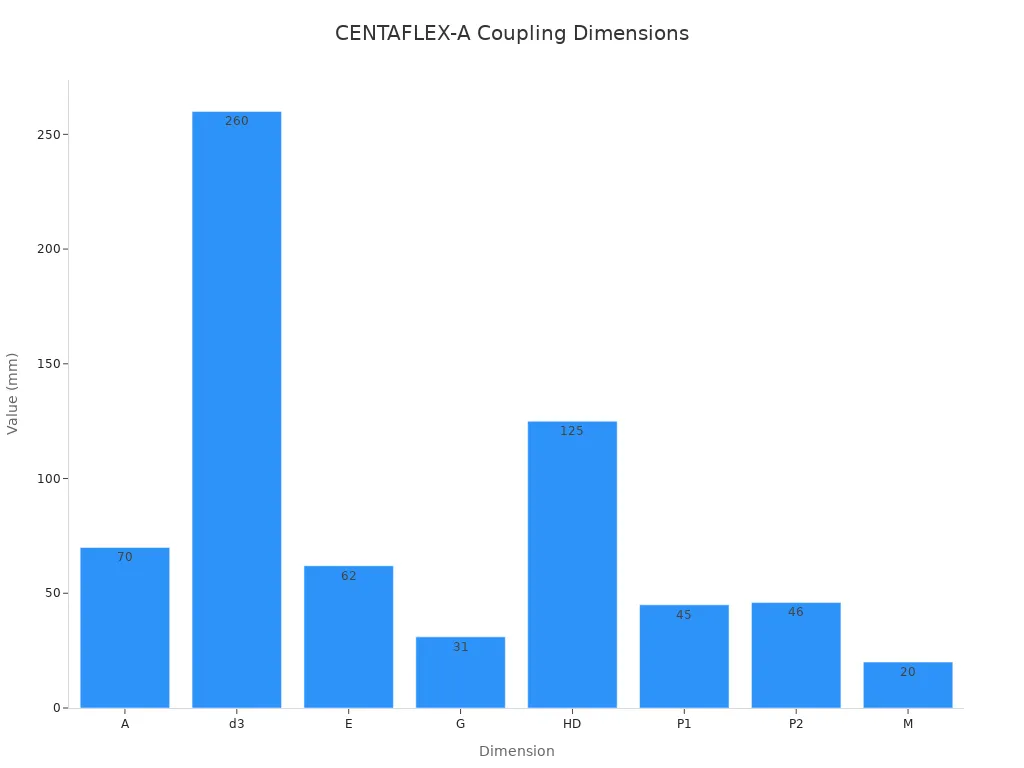
You can trust YNF Rubber to give you couplings that are the same size and work just as well as the original. This makes it easy to replace your coupling and keeps your equipment working smoothly.
KTR Coupling Model Code Identification
BoWex FLE-PA Code Logic
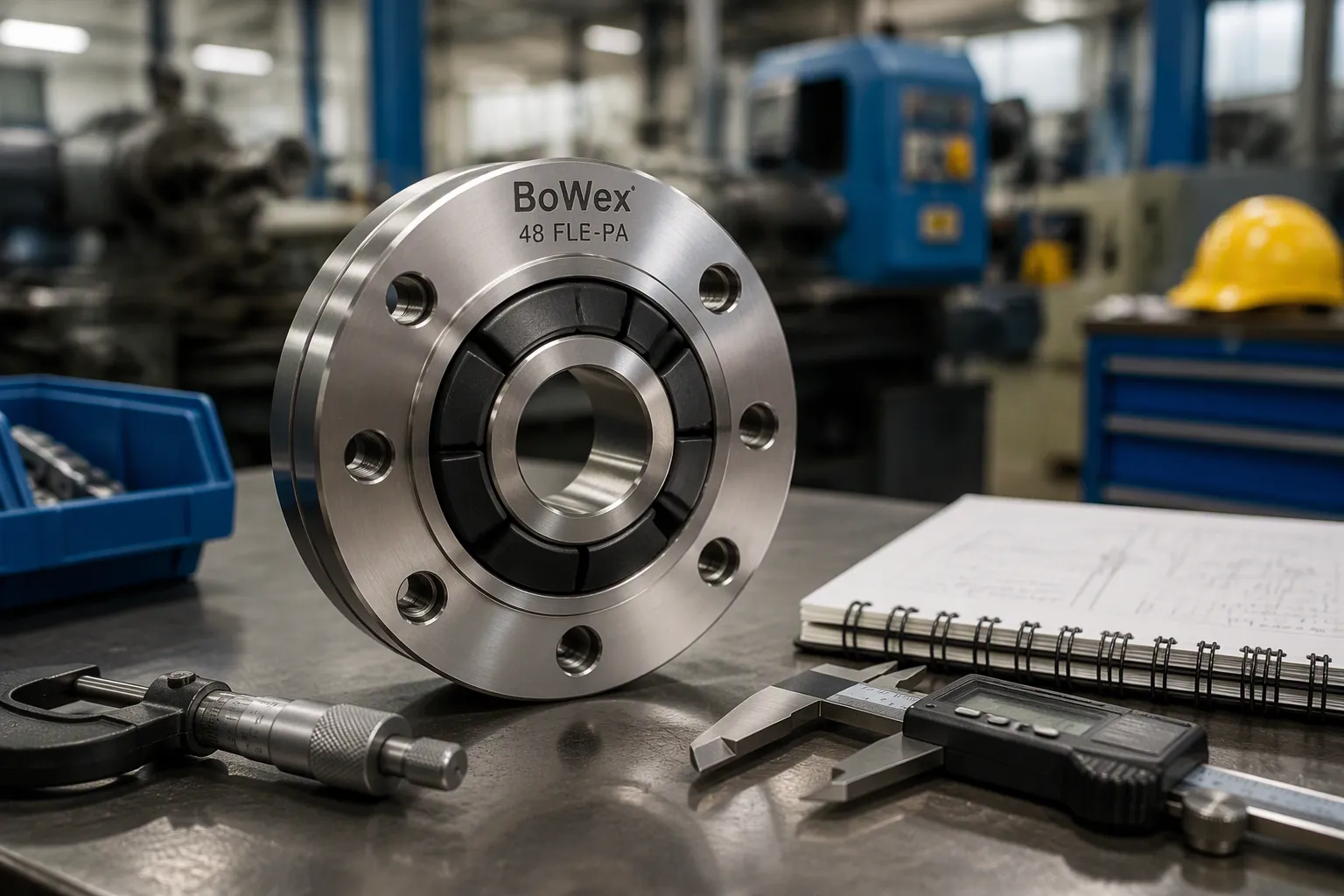
You will see BoWex FLE-PA coupling codes on many machines. These codes look complex, but you can break them down into simple parts. Each part of the code tells you about the series, size, and special features.
For example, a code might look like this:BoWex FLE-PA 140/110-65H7
Here is what each part means:
Code Part | Meaning |
|---|---|
BoWex FLE-PA | Series and product line |
140/110 | Flange diameter (mm) |
65H7 | Bore diameter and tolerance |
Tip: Always check the flange and bore sizes. These numbers must match your machine’s shafts and flanges. If you miss a number, the coupling will not fit.
You should also look for extra letters or numbers. These show special materials or mounting styles. Write down the full code before you order a replacement.
ROTEX Code Logic
ROTEX couplings use a different code system. You will see codes like ROTEX 55/60-28H7. Each part gives you key information.
ROTEX: Series name
55/60: Size or outer diameter (mm)
28H7: Bore diameter and tolerance
Some codes have extra letters for special spiders or hub types. For example, “ROTEX 55/60-28H7-GS” means a special spider material.
Note: You must match the spider material and hub type to your machine’s needs. The wrong material can cause early wear or noise.
Avoiding Matching Mistakes
You can avoid mistakes by following a simple checklist:
Write down the full code from your old coupling.
Measure the shaft and flange sizes.
Check the spider or rubber element type.
Look for any special letters or numbers.
Ask YNF Rubber for help if you are not sure.
Step | Why It Matters |
|---|---|
Full code | Ensures exact match |
Shaft/flange size | Prevents fit problems |
Element type | Keeps vibration control |
Special features | Matches unique machine needs |
YNF Rubber offers flexible rubber couplings that fit KTR models. You get reliable replacements that keep your machines running smoothly.
Practical Selection and Replacement Steps
Picking and changing couplings in machines is not hard. You just need to follow some simple steps. This helps you get the right part and keeps your machine working well. This section will show you what to check, how to stay safe, and how to work with YNF Rubber for the best results.
Key Technical Factors
You should look at some important things before you pick or change a coupling. These things help you match the coupling to your machine and stop problems later. The table below shows what you need to check:
Factor | Description |
|---|---|
Torque Capacity & Sizing | Make sure the coupling can handle your motor’s starting and peak torque. |
Speed Rating (RPM) | Match the coupling to your machine’s operating speed. |
Shaft Bore & Keyway Dimensions | Measure the shaft and keyway for a secure fit. |
Fill Fluid Type & Viscosity | Use the fluid type recommended by the manufacturer. |
Industry Certifications | Look for ISO 9001 or other safety standards. |
Duty Cycle & Environment | Pick seals that work in dust, water, or high heat. |
Starting Method Requirement | Choose constant-fill for simple loads or variable-fill for controlled starts. |
Ease of Maintenance & Service | Select designs that are easy to check and service. |
OEM vs. Aftermarket Compatibility | Make sure the coupling fits your machine model. |
Tip: Always check your measurements and what your machine needs before you buy a new coupling.
Safety Margin Considerations
You need to think about safety margins when you pick a coupling. Safety margins help keep your machine safe from surprises. Here are some things to remember:
Use a safety factor higher than 1. This means the coupling can take more than the load you expect.
Most machines use a safety factor between 1.1 and 2.1. For very important parts, it can be as high as 10.
Think about dust, heat, and heavy loads. These can change how much safety margin you need.
Check the material and design to make sure they can handle tough jobs.
Note: A good safety margin helps your machine last longer and stay safe.
Communicating with YNF Rubber for Custom Solutions
You can make picking and changing couplings easier by talking to YNF Rubber. The team at YNF Rubber can help you find the right flexible rubber coupling for your job. Here is a simple guide you can use:
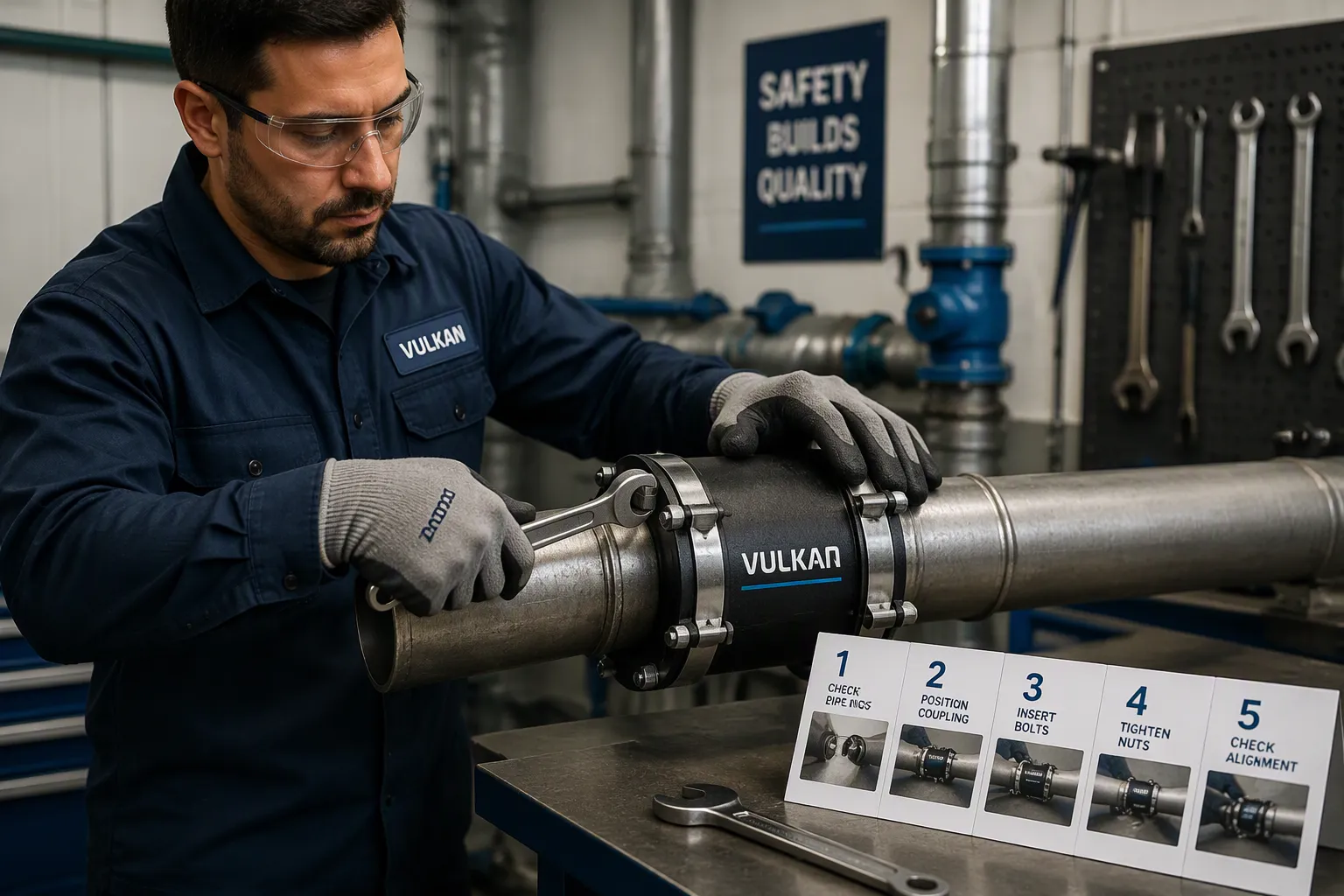
Find out the type and size of coupling you need. Use your machine’s manual or the code from your old coupling.
Look at your old coupling for cracks, wear, or missing parts.
Use a laser alignment tool to install the new coupling:
Clean the ends of the shafts.
Put the tool on both shafts.
Turn on the tool and follow the steps.
Move the shafts until the tool says they are lined up.
Tighten all bolts and check the alignment again.
Change the rubber element if you see deep cracks or missing pieces.
Contact YNF Rubber with your machine details and coupling model code identification. The team will help you pick the best replacement.
YNF Rubber can make special couplings. You can ask for different materials, sizes, or designs for your machine.
Buyer’s Checklist for Accurate Selection
You should get this information before you buy a new coupling. This checklist helps you avoid mistakes and get the right part:
Checklist Item | Description |
|---|---|
Media compatibility | Make sure the coupling works with your fluids. |
Pressure suitability | Check the working and surge pressure. |
Hose match | Confirm the hose type and size. |
End connection design | Match the connection to your assembly. |
Connection standard | Verify threads and interfaces. |
Installation practicality | Make sure it is easy to install and service. |
Field reliability | Think about vibration, dirt, and weather. |
Supplier support | Ask questions about your application. |
Tip: Write down all your measurements and details before you talk to YNF Rubber. This will help you get the right coupling faster.
If you follow these steps and use this checklist, you can make sure your coupling change is safe, quick, and works well. YNF Rubber’s flexible rubber couplings give you the strength and long life you need for your machines.
Example: Coupling Replacement Process
Decoding the Existing Model Code
You start by looking at the old coupling on your machine. Find the model code stamped or printed on the coupling. Write down every letter and number you see. The code tells you the series, size, and special features. For example, you might see a code like ARCUSAFLEX 140/110-65H7. Each part of this code gives you important information. The first part shows the product line. The numbers show the size and bore diameter. The last part tells you about the fit or tolerance.
Tip: Take a clear photo of the old coupling and its code. This helps you avoid mistakes when you order a new one.
Confirming Technical Specifications
You need to check if the new coupling will work with your machine. Use this checklist to confirm the technical details:
Make sure the coupling can handle the torque your machine needs. This stops early failure.
Check if the coupling can handle shaft misalignment. This protects your equipment from stress.
Pick materials that match your work area. Some couplings need to resist heat, chemicals, or water.
Think about how easy it is to install and check the coupling. This saves time during maintenance.
Measure the space where the coupling will go. The new part must fit without problems.
Specification | Why It Matters |
|---|---|
Torque Rating | Prevents breakdowns |
Misalignment Tolerance | Protects connected parts |
Handles tough environments | |
Serviceability | Makes checks and repairs easier |
Size Compatibility | Ensures a perfect fit |
Final Selection with YNF Rubber
Now you can choose the right replacement. Share your model code, machine details, and technical needs with YNF Rubber. The team will help you match the best flexible rubber coupling for your job. You can ask for custom materials or sizes if your machine has special needs. YNF Rubber’s couplings fit many brands and models. You get a reliable part that keeps your machine running smoothly.
Note: Always double-check your measurements and details before you order. This helps you get the right coupling the first time.
When you follow clear steps to pick the right coupling model code, your machine works better and breaks less. The table below shows how this helps:
Outcome Description | Reference |
|---|---|
Good model choices keep parts working together well | Hellhake et al. 2022 |
Careful picking stops models from being too exact | Shahumyan and Moeckel 2015 |
You make smarter choices when running machines | N/A |
If you work with YNF Rubber, you get rubber couplings that bend and stop shaking. They last a long time. You also get help from experts at every step:
Find out what kind of hole you need.
Check the size so it fits right.
Take and send pictures for expert advice.
Use the checklist and ask YNF Rubber for help to get good, strong couplings.
FAQ
How do you know which coupling model fits your machine?
You should check the old coupling’s model code and measure the shaft and flange sizes. If you are unsure, take a photo and contact YNF Rubber for help.
Can you replace an OEM coupling with a YNF Rubber coupling?
Yes, you can. YNF Rubber designs flexible rubber couplings to match many OEM models. You get a reliable fit and strong performance.
What should you do if your coupling wears out quickly?
Check if you picked the right size and material. Make sure the alignment is correct. If you need help, ask YNF Rubber for advice on better options.
How often should you inspect your flexible rubber coupling?
You should inspect your coupling every few months. Look for cracks, wear, or missing pieces. Regular checks help you avoid sudden machine stops.
Can YNF Rubber make custom couplings for special machines?
Yes! YNF Rubber offers custom solutions. You can share your machine’s details and needs. The team will design a coupling that fits your requirements.