
Start picking the right Centaflex coupling for your equipment. When you match the coupling to your needs, your machines work better. This fit lowers vibration and stops early damage. You also make your equipment last longer and work well. You can skip expensive errors and feel good about your choice.
Key Takeaways
Picking the right Centaflex coupling helps machines work better and lowers vibration. This makes equipment last longer.
Always look at torque ratings. Match them to what your machine needs. This stops the coupling from wearing out too soon or breaking.
Think about the environment when you pick materials. Polyurethane works best with oil and chemicals. Rubber is good for absorbing shocks.
Make sure shafts are lined up right. This keeps the coupling from wearing out too much or failing. It also saves money over time.
Talk to suppliers like YNF RUBBER for expert help. They can help you pick the best coupling for your job.
What is a Centaflex coupling?
Definition and function
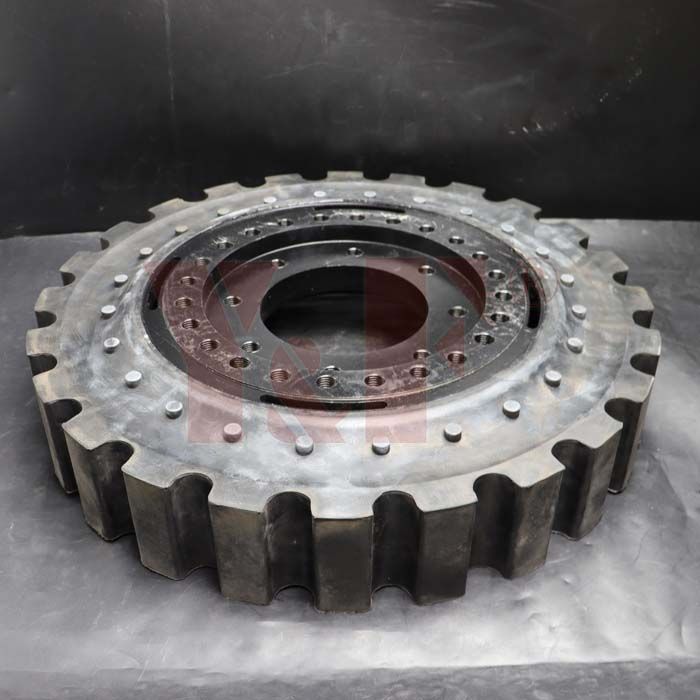
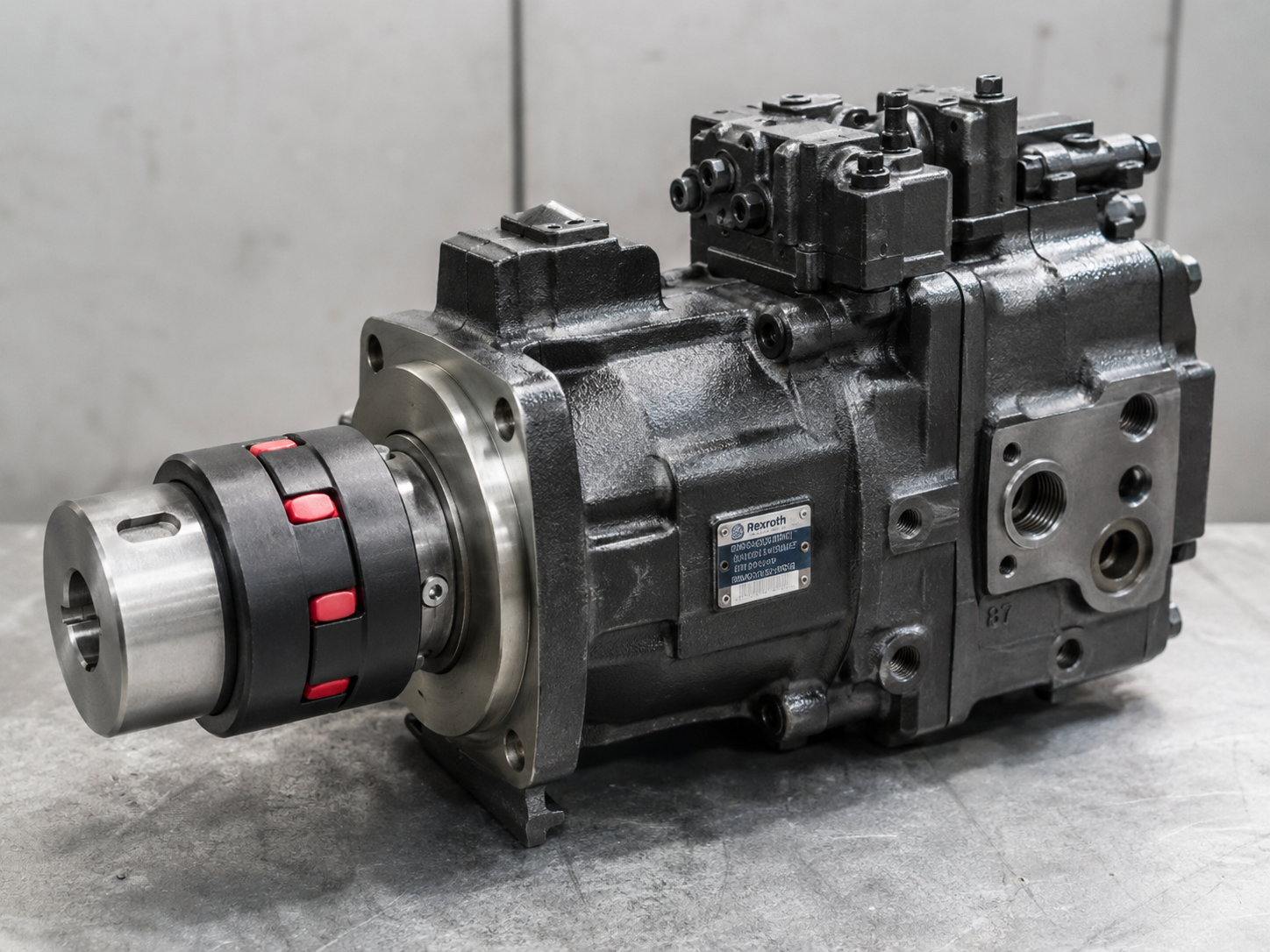
A Centaflex coupling connects two shafts in a machine. It moves power from one shaft to the other. It also helps stop shocks and cuts down vibration. Centaflex couplings help machines run without problems. They protect machines from damage if things are not lined up or if there are sudden heavy loads.
Centaflex couplings have flexible parts. These parts let the shafts move a little. This means your machine works better and does not wear out fast. The coupling also helps stop noise and keeps the machine steady. There are many kinds of Centaflex couplings for different jobs.
Tip: Picking a Centaflex coupling helps your machine last longer and saves you money on repairs.
Common applications
Centaflex couplings are used in many fields. They work in pumps, compressors, and generators. You also see them in marine engines, conveyor belts, and big fans. These couplings are good for both strong and light machines.
Here are some places where Centaflex couplings are used:
Marine propulsion systems
Industrial machinery
Agricultural equipment
Power generation units
Construction machines
Centaflex couplings are picked for machines that shake or are not lined up right. Many engineers pick Centaflex because they work well. If you need a supplier, YNF RUBBER is a great choice for good products and help.
Application Area | Benefit of Centaflex Coupling |
|---|---|
Marine engines | Reduces vibration |
Pumps & compressors | Handles misalignment |
Generators | Protects against shock loads |
Using Centaflex couplings in these places makes machines safer and work better.
Centaflex specifications
Size and dimensions
You need to know the size before you choose a Centaflex coupling. The right size helps your machine work well and stay safe. Each Centaflex model has its own bore diameter, keyway, and set screw hole. These details make sure the coupling fits your shafts.
Model | Nominal Bore Diameter (d1, d2) | Tolerance | Keyway Width (W1, W2) | Keyway Height (T1, T2) | Set Screw Hole (M) |
|---|---|---|---|---|---|
0430 | 60.3+0.30 | H7 | 2-M10 | – | – |
60 | 60+0.0300 | H7 | 15+0.075+0.032 | 65.0+0.30 | 2-M10 |
63 | 63+0.0300 | H7 | 18+0.075+0.032 | 69.0+0.30 | 2-M10 |
65 | 65+0.0300 | H7 | 18+0.075+0.032 | 71.0+0.30 | 2-M10 |
Tip: Always check the shaft size and keyway before you buy. This helps you avoid problems with fitting.
Torque ratings (nominal and maximum)
You have to match the torque rating to your machine. Torque is the force that turns the shaft. Each Centaflex coupling has a nominal torque (TKN) and a maximum torque (TKmax). Nominal torque is what the coupling can handle all the time. Maximum torque is the highest force it can take for a short time.
If you pick a coupling that is too small, it can break or wear out fast. If you pick one that is too big, you waste money and space. Always check your machine’s highest torque and pick a Centaflex coupling that can handle it.
Note: Sizing for both nominal and maximum torque keeps your machine safe and helps the coupling last longer.
Material options
The material of your Centaflex coupling changes how it works. You can pick polyurethane (PU) or rubber. Each material has its own strengths.
Material | Durability | Wear Rate | Environmental Resistance |
|---|---|---|---|
Polyurethane (PU) | High | Lower | Excellent |
Rubber | Moderate | Higher | Moderate |
Polyurethane works well in places with oil, chemicals, or changing temperatures. It lasts longer and wears out less. Rubber is softer and better for stopping noise and shocks. You may need to check rubber couplings more often if your machine works in tough places.
Material | Torsional Flexibility | Torque Handling | Best Use Case |
|---|---|---|---|
Polyurethane (PU) | Moderate | High | Steady, high-torque |
Rubber | High | Moderate | Frequent starts/stops |
Polyurethane helps reduce vibration in fast machines. Rubber is good for machines that start and stop a lot. If you need a coupling for high heat or chemicals, the CENTAFLEX-KF model is a smart choice. It works up to 100°C (212°F) all the time and up to 120°C (248°F) for short times. Its special elastomer stands up to heat and harsh chemicals.
Tip: Ask YNF RUBBER for help if you are not sure which material fits your needs.
Misalignment tolerance
Misalignment happens when shafts do not line up right. Centaflex couplings can handle some misalignment. This keeps your machine safe and helps it last longer.
Coupling Type | Angular Misalignment Tolerance |
|---|---|
Elastomer jaw coupling | Up to 1.0° |
Steel disc-pack coupling | About 0.5° per pack (1.0° double) |
Metal bellows coupling | Up to 1.5° |
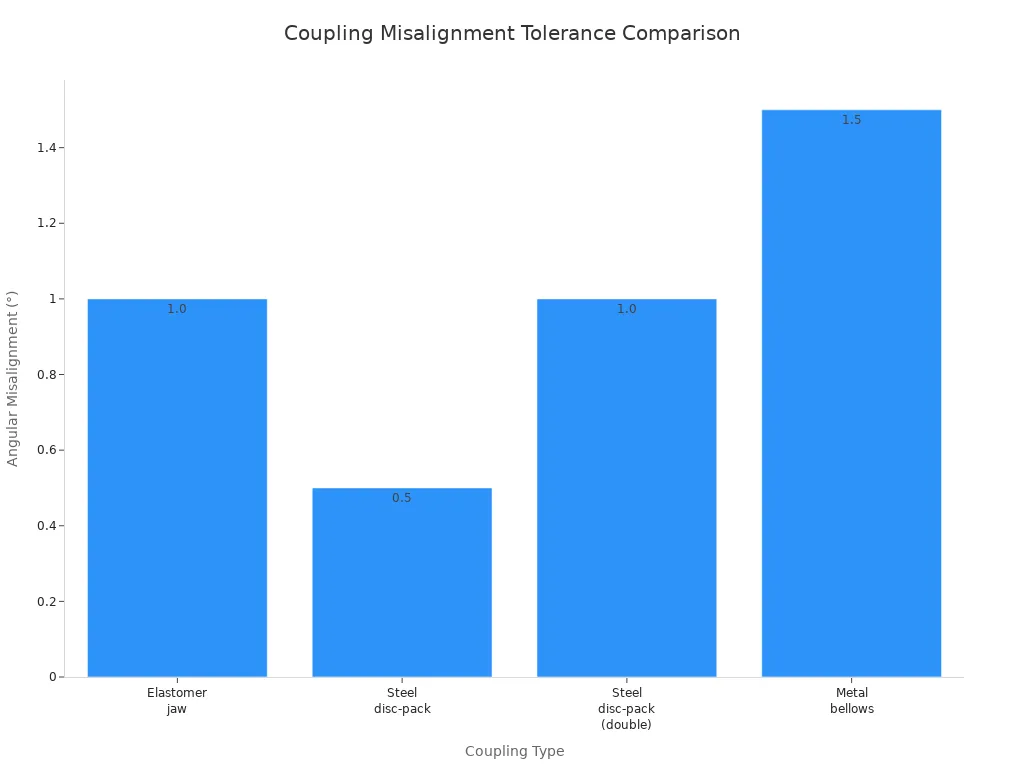
Misalignment tolerance is important for a long-lasting coupling.
You should check the type of misalignment: angular, parallel, or axial.
Good alignment helps all parts last longer, not just the coupling.
Environmental factors
You must think about where your machine works. Some places have oil, water, heat, or chemicals. Polyurethane resists oil and water very well. Rubber works well in water but not as well with oil or solvents.
Material | Oil Resistance | Solvent Resistance | Water Resistance |
|---|---|---|---|
Polyurethane (PU) | High | Moderate | High |
Rubber | Moderate | Low to Moderate | High |
If your machine works in a hot or harsh place, pick a Centaflex coupling made for those conditions. The CENTAFLEX-KF model is a good example. It handles high heat and tough chemicals.
Note: Always match the coupling material to your environment. This keeps your machine safe and working well.
Centaflex selection steps
Identify application requirements
You need to start by understanding what your machine needs. This step helps you avoid mistakes and makes sure you pick the right coupling. Follow these steps to identify your application requirements:
Write down the torque your machine needs. Check both the normal and the highest torque. Always choose a coupling that can handle the maximum torque from your driver.
Find out the speed (RPM) your machine runs at. This helps you match the right coupling.
Measure the shaft sizes and keyway dimensions. Make sure you know the bore size for each shaft.
Look at the types of misalignment your machine may have. Decide if you need a coupling that handles angular, parallel, or axial misalignment.
Check if your industry has special rules or standards, like ISO 9001 or marine approvals.
Think about how stiff or flexible you want the coupling to be. Some machines need more damping to reduce vibration.
Add up the total cost, including how often you need to replace parts and how long the coupling will last.
Make sure the materials have the right certifications and warranty.
Check if the coupling will fit in your machine’s space and matches the bolt pattern.
Ask about after-sales support and if spare parts are easy to get.
Tip: Write down all your needs before you start looking at models. This makes the next steps much easier.
Match specifications
Once you know your needs, you can match them to the right centaflex coupling. Use the table below to help you compare the most important parameters:
Parameter | What to Check |
|---|---|
Torque Capacity | Pick a coupling that can handle at least 15-20% more than your peak torque. |
Shaft Compatibility | Make sure the bore and keyway match your shaft sizes and follow standards. |
Industry Compliance | Check if your application needs special approvals, like for food or marine. |
Performance Metrics | Look at misalignment tolerance (0.5-3°), temperature range, and RPM limits. |
Maintenance Considerations | See how often you need to replace elastomers and the expected service life. |
Quality Assurance | Make sure the materials have certifications, like for cast iron or rubber. |
Integration | Confirm the coupling fits your machine’s bolt pattern and mounting space. |
You should always check the torque first. If the coupling cannot handle the highest torque, it may fail. Next, check the shaft sizes and keyways. Make sure the coupling fits your machine. Look at the temperature and speed limits. Some couplings work better in hot or cold places. Others handle high speeds better.
Note: Matching the right specs keeps your machine safe and helps it last longer.
Check equipment compatibility
You need to make sure the centaflex coupling fits with your existing equipment. Use this table to check the main points:
Specification | What to Look For |
|---|---|
Torque Capacity | Does the model handle your machine’s torque? |
Misalignment Compensation | Can it handle the type and amount of misalignment? |
Operating Speed | Is it safe at your machine’s RPM? |
Temperature Range | Will it work in your machine’s environment? |
Material Compatibility | Does it match your shaft material? |
Elastomer Hardness | Is the hardness right for your application? |
Check the mounting space and bolt patterns. Make sure the coupling will fit without changes to your machine. If you have special needs, like high heat or chemicals, pick a model made for those conditions.
Tip: If you are not sure, ask your supplier for help. YNF RUBBER offers expert advice and a wide range of centaflex couplings.
By following these steps, you can choose the right centaflex coupling for your machine. This helps you avoid problems and keeps your equipment running smoothly.
Centaflex models comparison
Centaflex-A features
Centaflex-A is the most popular model. Many engineers pick it because it fits many machines. This model has high torsional elasticity. It can twist and take shocks without breaking. There is a built-in fail-safe device. If the flexible part breaks, the coupling still holds the shafts together. This keeps your machine safe. Centaflex-A works in pumps, generators, and marine engines. You can use it where you need strong vibration control.
Tip: Centaflex-A is a smart choice if you want a reliable and safe coupling.
Centaflex-R features
Centaflex-R gives you a different kind of flexibility. It has a progressive torsional characteristic. This means it gets stiffer when the load gets higher. You get smooth starts and stops. This model works well in machines that change speed often. You can use it in compressors, conveyors, and construction equipment. Centaflex-R handles misalignment well. It helps your machine run quietly and last longer.
Handles frequent speed changes
Reduces noise and vibration
Good for machines with misalignment
Key specs overview
You may want to compare the two models quickly. The table below shows the main differences:
Feature | Centaflex-A | Centaflex-R |
|---|---|---|
Torsional Elasticity | High | Progressive |
Fail-Safe Device | Yes | No |
Best For | Steady loads, safety | Variable loads, flexibility |
Misalignment Handling | Good | Excellent |
Noise Reduction | Good | Very Good |
If you need help picking the right model, YNF RUBBER can help you. They know a lot and give reliable service. You can trust them to supply the best centaflex couplings for your needs.
Common mistakes to avoid
Picking the right Centaflex coupling looks simple, but people often make mistakes. You can stop these problems if you know what to look for. Here are some common mistakes and how to avoid them.
Overlooking torque requirements
You should always check the torque rating before you choose a Centaflex coupling. If you skip this step, the coupling might break or wear out early. To avoid this:
Always check the torque rating for each Centaflex coupling you look at.
Make sure the coupling can handle your machine’s highest torque.
Pick a performance rating that is the same or higher than your needs.
Think about the service factor. This tells you how much extra load the coupling can take.
Choose a coupling with a torque rating above your machine’s normal needs.
Tip: A coupling that fits your torque needs will last longer and keep your machine safe.
Ignoring environmental needs
Some people forget to think about where the coupling will be used. Heat, oil, water, and chemicals can change how long your coupling lasts. You should:
Pick materials that can handle your workplace conditions.
Check if your machine gets hot or faces strong chemicals.
Use polyurethane if you need oil and chemical resistance. Pick rubber if you want better shock absorption.
Ask your supplier, like YNF RUBBER, for help if you are not sure.
A coupling that matches your environment will protect your machine and help it run longer.
Misjudging misalignment
Misalignment is a problem that can cause big trouble. If you do not check for misalignment, your coupling can wear out fast or even break. Problems from misalignment are:
More wear and shaking in the coupling.
A higher chance of machine failure because of extra force.
Bad power transfer and more machine problems.
You should always check alignment when you install the coupling and after the machine runs for a while. Good alignment helps your Centaflex coupling work better and last longer.
Note: Checking for misalignment saves money and keeps your equipment working well.
You can pick the right Centaflex coupling by doing a few easy things. First, learn what your machine needs. Next, match the specs to your machine. Then, check if the coupling fits your equipment. Always look at different models and see how they are not the same. This guide helps you choose wisely and feel sure about your choice. If your job is tricky, check the technical details or ask a supplier for help.
Need expert advice? YNF RUBBER gives good support and sells quality Centaflex couplings.
FAQ
How do you choose the right Centaflex coupling size?
First, look at your shaft diameter and keyway. Make sure these match the coupling specs. Always measure everything with care. If you are not sure, you can ask YNF RUBBER for help.
What is the difference between Centaflex-A and Centaflex-R?
Centaflex-A has high elasticity and a fail-safe part. Centaflex-R is more flexible as the load changes and is better for misalignment. Choose the one that works best for your machine.
Can Centaflex couplings handle high temperatures?
Yes, some models work well in hot places. For example, CENTAFLEX-KF can handle up to 100°C. Always check the temperature limit before you buy a coupling.
How often should you check or replace a Centaflex coupling?
You should look at the coupling every six months. Change it if you see any damage or wear. Checking often helps keep your machine safe.
Where can you buy quality Centaflex couplings?
You can get Centaflex couplings from YNF RUBBER. They give expert help and sell good products for many kinds of machines.