

Related Content
What Is a Heavy Duty Compressor Rubber Coupling?
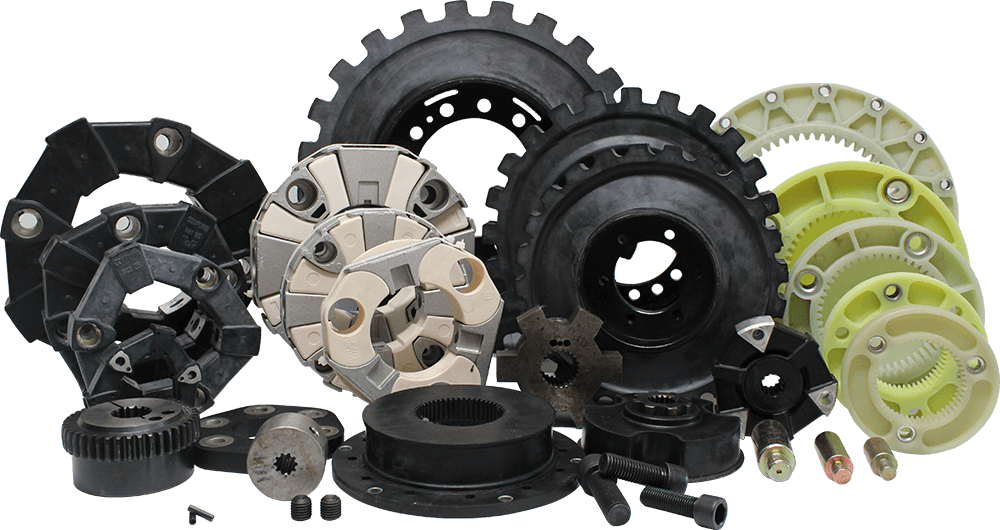
A heavy duty compressor rubber coupling is a flexible mechanical connection component installed between a driving source and compressor unit. It allows torque transmission while reducing vibration and protecting mechanical parts.
Compared with rigid couplings, rubber couplings provide additional flexibility, allowing them to absorb torsional vibration caused by diesel engines, electric motors, and changing compressor loads.
Why Are Rubber Couplings Important for Compressor Systems?
In heavy duty compressor applications, rubber couplings are important because they help:
- Reduce torsional vibration
- Protect compressor shafts and bearings
- Minimize shock loads during startup
- Improve equipment operation stability
- Extend service life of drive components
- Reduce maintenance frequency
Key Factors When Choosing a Compressor Coupling
| Selection Factor | Description |
|---|---|
| Compressor Power | Determines required torque capacity |
| Engine Speed | Ensures correct operating compatibility |
| Load Condition | Influences coupling durability requirements |
| Installation Size | Ensures replacement accuracy |
| Vibration Level | Determines required damping performance |
Related Products
- Heavy Duty Flexible Rubber Coupling
- Diesel Engine Compressor Coupling
- Industrial Torsional Coupling
- Generator Drive Rubber Coupling
- Rubber Vibration Damper
- Engine Mount Rubber Buffer
- Industrial Shock Absorber
Frequently Asked Questions
Q1: What is the main function of a heavy duty rubber coupling?
The main function is to transfer torque between the engine and compressor while absorbing vibration and reducing mechanical shock.
Q2: Why is rubber used in compressor couplings?
Rubber provides flexibility and damping characteristics, allowing vibration energy to be absorbed and reducing stress on connected mechanical components.
Q3: Can YNF supply customized compressor rubber couplings?
Yes. YNF can manufacture customized rubber coupling solutions based on equipment models, drawings, dimensions, and original part specifications.
Q4: What information should buyers provide before ordering?
Buyers can provide compressor model, engine model, coupling photos, dimensions, or original part numbers to ensure accurate product matching.
Q5: Does YNF support wholesale and distributor orders?
Yes. Bulk orders, OEM replacement supply, and long-term cooperation programs are supported for global B2B customers.